Hiring the wrong game development studio is one of the most expensive mistakes in product development. Projects stall, money disappears, and the game you described in the brief ends up bearing little resemblance to what gets built. The mistake usually doesn’t happen because of dishonesty. It happens because the brief was vague, the vetting was shallow, or the contract had no milestone structure to catch problems early.
Hiring a game development studio the right way takes 2 to 6 weeks. Rushing it costs months. This guide walks you through every step — from defining your project through signing the right contract — so the studio you choose has the best possible chance of shipping the game you actually want.
This guide is for: founders, brand owners, publishers, and first-time clients evaluating game development studios for mobile, PC, or console projects.
Key Takeaways
- Studios cannot give you an accurate quote for a vague brief. Define platform, genre, audience, budget, and core mechanic before you contact anyone.
- Portfolio games that shipped to real stores are a different signal from polished demos built for sales calls. Play the games before shortlisting.
- A paid discovery phase before full production is the single most important structural decision you can make. If pre-production is painful, production will be worse.
- Red flags in proposals — vague scope, no milestone structure, unrealistically fast timelines — predict problems more accurately than polished pitch decks predict success.
- Phantom Cave Studio offers transparent milestone-based contracts, regular build deliveries, and a team that asks the right questions before agreeing to anything.
Step 1: Define Your Project Before You Reach Out
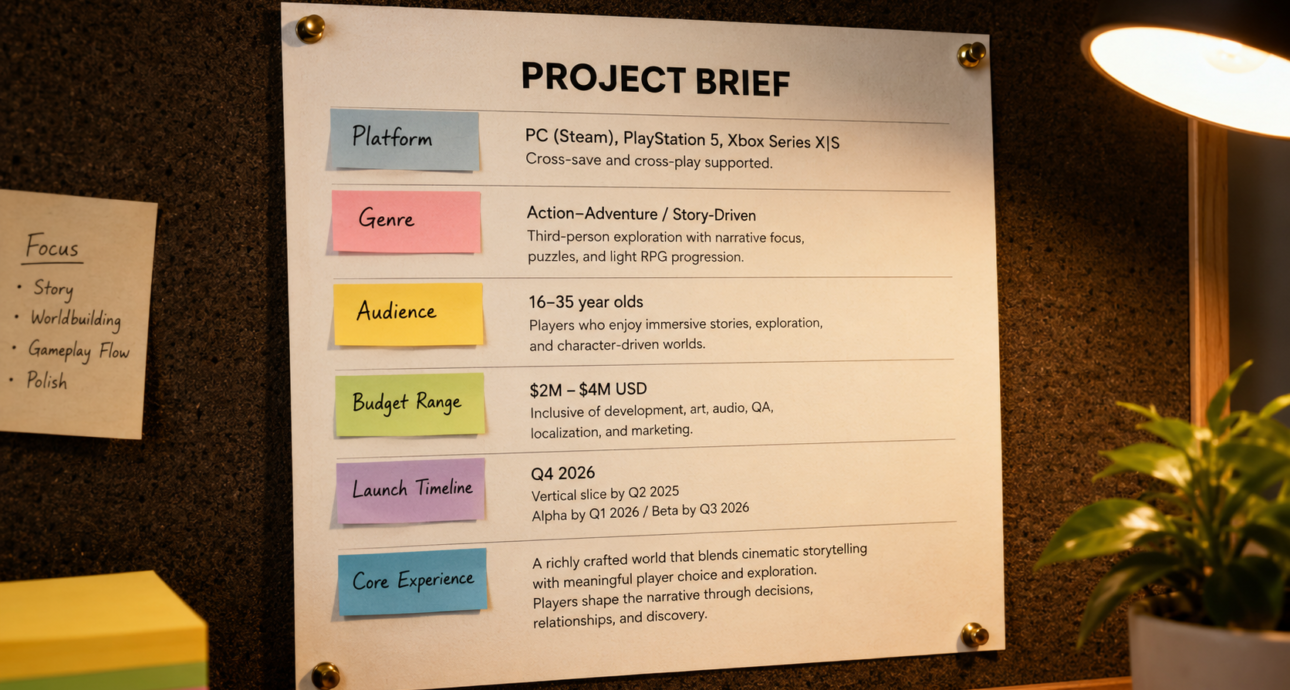
This is the step most clients skip, and it’s why most studio search processes produce useless proposals. A studio cannot give you an accurate scope, a realistic timeline, or a meaningful cost estimate for a vague idea. Before you contact anyone, answer these questions in writing.
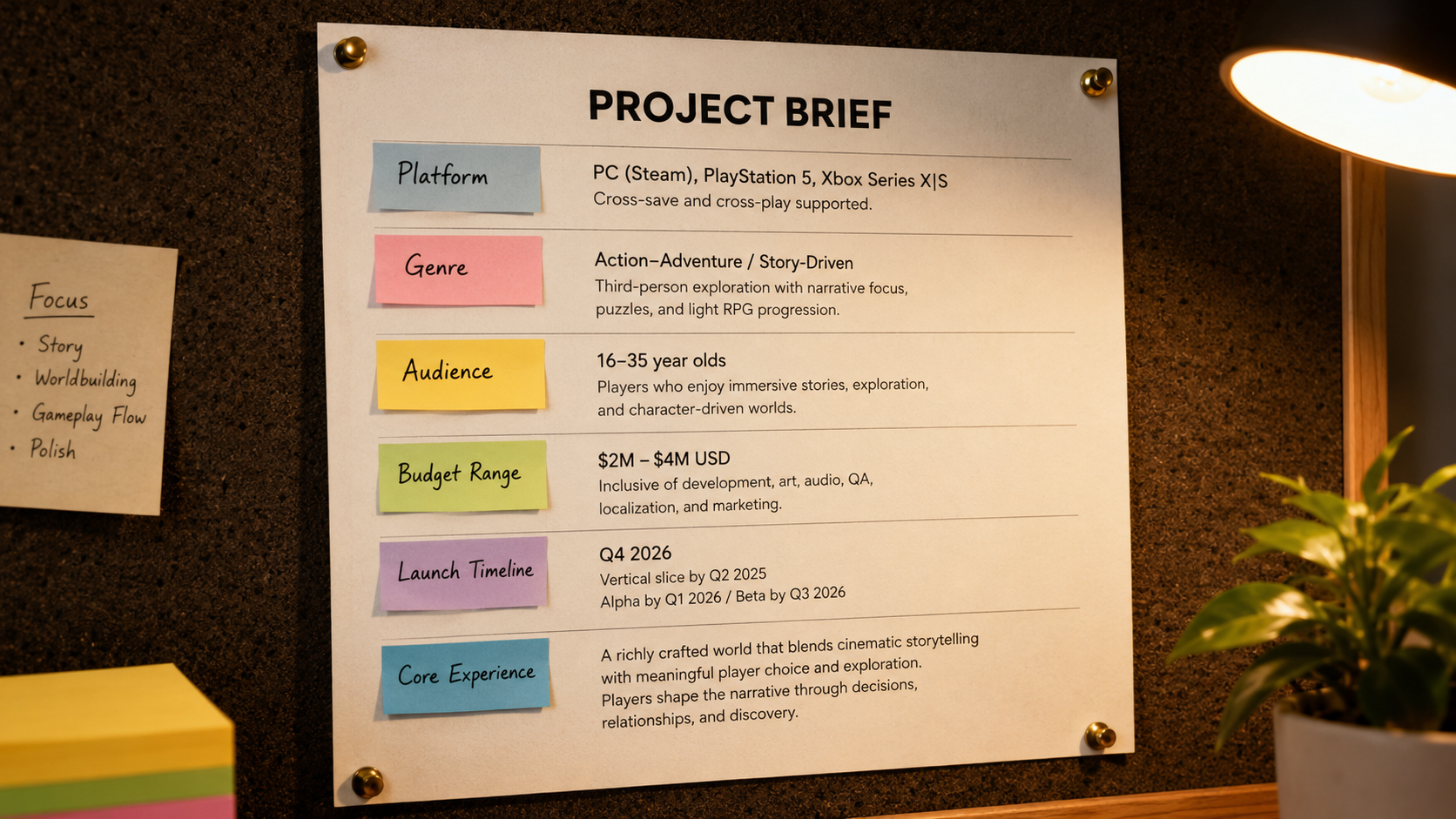
Platform: Mobile (iOS, Android, or both), PC (Steam, Epic), console (PlayStation, Xbox, Nintendo), or cross-platform from launch?
Genre: Be specific. “Action game” is not a genre. “Third-person cover shooter with narrative branching and a 12-hour campaign” is. The more specific the genre definition, the more accurately a studio can estimate what it takes to build.
Target audience: Age range, platform habits, comparable games they already play. This determines art style, tone, pacing, and monetization model.
Budget range: Give a real number, even a range. Studios that won’t quote without a budget are protecting both sides. “No budget” briefs attract studios that plan to scope-expand after the contract is signed.
Launch timeline: Is there a fixed date (a seasonal launch, an event tie-in) or a flexible window? Fixed dates change how a studio staffs a project.
The one thing the game must do: What is the single experience the player must have? If you can’t answer this in one sentence, the game concept needs more definition before it needs a studio.
The clearer your brief, the better the proposals you receive. Weak briefs produce padded proposals designed to hedge scope risk. A tight brief produces specific answers you can compare meaningfully. For help thinking through game types and core mechanics before you brief a studio, see our game development ideas guide.
Step 2: Build a Shortlist of Studios
With a clear brief in hand, build a list of 5 to 8 studios before you start having conversations. Going straight to one studio removes your ability to benchmark proposals against each other.
Where to find studios:
Clutch.co and GoodFirms are the most reliable discovery platforms because both verify reviewer identity and audit submissions. A studio with 15 verified Clutch reviews tells you something a studio with 15 testimonials on its own website doesn’t.
LinkedIn filtered by “game development studio” plus your target location or region surfaces studios that aren’t always in the directories. Look at who the team members are, how long they’ve been there, and whether the people who built the portfolio games are still at the studio.
Developer communities on Discord and Reddit (r/gamedev, r/indiegaming) generate genuine recommendations. Someone who shipped a game with a studio and will say so publicly is a stronger signal than any directory ranking.
Personal referrals from people who have shipped games are the highest-value signal of all. One warm referral from a founder who used a studio and would use it again outweighs five cold directory listings.
For context on how the broader game development studio market breaks down by region and tier, see our guides to game development companies in the USA and to game development outsourcing.
Step 3: Evaluate Their Portfolio Critically
A portfolio is the first filter, not the final one. Most studio portfolios show the best 5 to 10% of their work, and many include projects they contributed to rather than owned end-to-end. Evaluate it with these questions.
Did the games actually ship? A portfolio of cancelled projects, white-label prototypes, and vertical slices that never became games tells you that the studio has a history of not finishing. Look for App Store links, Steam pages, and Google Play listings. Play the games.
Do the games work? Check the reviews on the stores where they shipped. A studio with a library of 2-star mobile games that consistently receive complaints about crashes or unfinished content has a quality control problem, regardless of how polished its portfolio page looks.
Does the quality match what you need? Be honest. A studio that builds great hyper-casual mobile titles isn’t automatically the right choice for a narrative PC RPG, even if the portfolio looks impressive. Genre conventions, session design, and retention mechanics are meaningfully different across categories.
Do they have experience on your specific platform? Console development requires platform certification expertise and experience with first-party submission processes that PC and mobile studios don’t automatically have. Ask specifically — don’t assume.
Our own shipped catalog and the Project V technical breakdown are examples of what verifiable portfolio depth looks like: named systems, described problems, documented solutions.
Step 4: Talk to Their Previous Clients
A studio’s proposal tells you how they want to be perceived. Their previous clients tell you how they actually performed.
Ask every shortlisted studio for 2 to 3 references you can contact directly. Reputable studios provide these without hesitation. A studio that can’t produce references — or that produces only anonymous testimonials — is a significant red flag.
When you speak to the references, ask these specific questions:
- Did the project ship on time and on budget, or close to it?
- How did the studio handle problems when they arose?
- How was day-to-day communication — responsive, proactive, or hard to reach?
- Did the final game match what was scoped in the original proposal?
- Would you hire them again for your next project?
The last question is the most revealing. A client who says “yes, we’re already planning to” is a stronger signal than a glowing testimonial that never answers whether they’d repeat the experience.
Step 5: Evaluate the Proposal
A good proposal from a game development studio isn’t a pitch document. It’s a production plan. These are the elements that separate a credible proposal from a sales document with a price tag at the end.
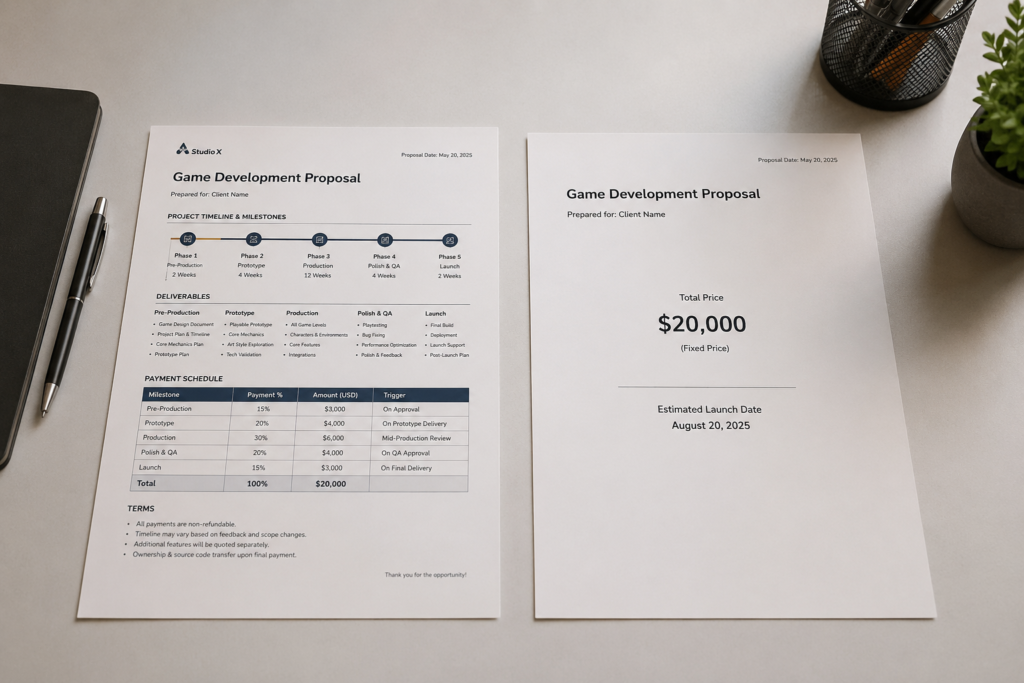
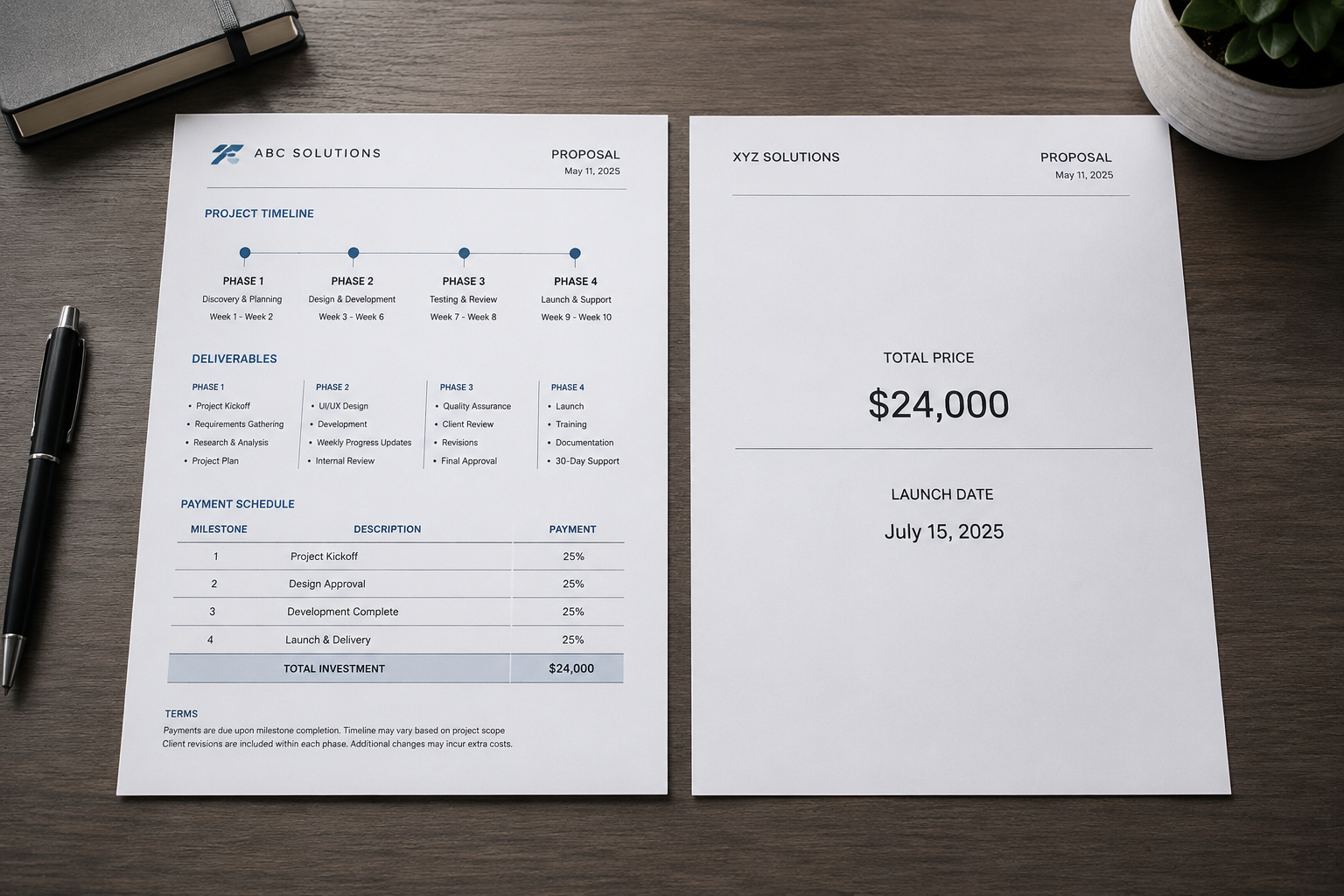
Phase breakdown with deliverables. Each phase of development (pre-production, vertical slice, alpha, beta, gold) should have named deliverables and acceptance criteria. You should be able to read the proposal and know exactly what you’ll receive and when.
Milestone structure with payment tied to delivery. Milestone-based contracts protect both sides. The studio has clear targets to hit. You have clear checkpoints to review before releasing the next payment. A proposal with no milestone structure is a proposal designed for scope disputes.
Clear pricing with what’s included and what isn’t. Scope creep starts with ambiguous inclusions. A good proposal explicitly states what is in scope and what requires a change order. This isn’t a red flag — it’s good practice.
A communication plan. Who is the day-to-day contact? How often are build deliveries? How are decisions documented? Studios that don’t have an answer to these questions haven’t thought through the operational side of the engagement.
Red flags to watch for:
| Red Flag | What It Signals |
|---|---|
| No shipped games in portfolio | History of not finishing projects |
| Vague scope with no phase breakdown | No accountability, hard to track progress |
| Unusually fast timeline for the described scope | Underestimating complexity or planning to cut corners |
| No references available or references only | Previous clients unwilling to recommend them |
| All-in fixed price with no milestone breakdown | Hidden costs and scope disputes ahead |
| No NDA offered or refused | Doesn’t understand standard client protection |
For a full breakdown of what good game development costs look like by platform and scope, see our game development cost guide.
Step 6: Start With a Paid Discovery Phase
This is the most important structural decision in the entire hiring process, and the one most clients skip because it adds 2 to 4 weeks to the start date.
A paid discovery phase (sometimes called a pre-production phase) produces three deliverables before a line of production code is written:
Game Design Document (GDD). A complete specification of every game system, mechanic, level, and player interaction. A GDD forces every design decision to be made on paper before it’s made in the engine — which is 10 to 50 times cheaper than making it during production.
Technical Architecture Document. The engineering plan for how the game’s systems connect. Multiplayer architecture, database structure, platform integration, and engine configuration decisions made here save weeks of rework later.
Art Style Guide. Defines visual direction, character design standards, environment palette, and UI language. An art style guide agreed on before production eliminates the most common source of back-and-forth during the asset creation phase.
Pre-production also answers the most important question in hiring a game development studio: can you work with this team? If pre-production communication is slow, decisions are hard to get approved, and the GDD comes back missing half of what you discussed — production will be worse. Pre-production is the honest test every studio relationship needs before the full budget is committed.
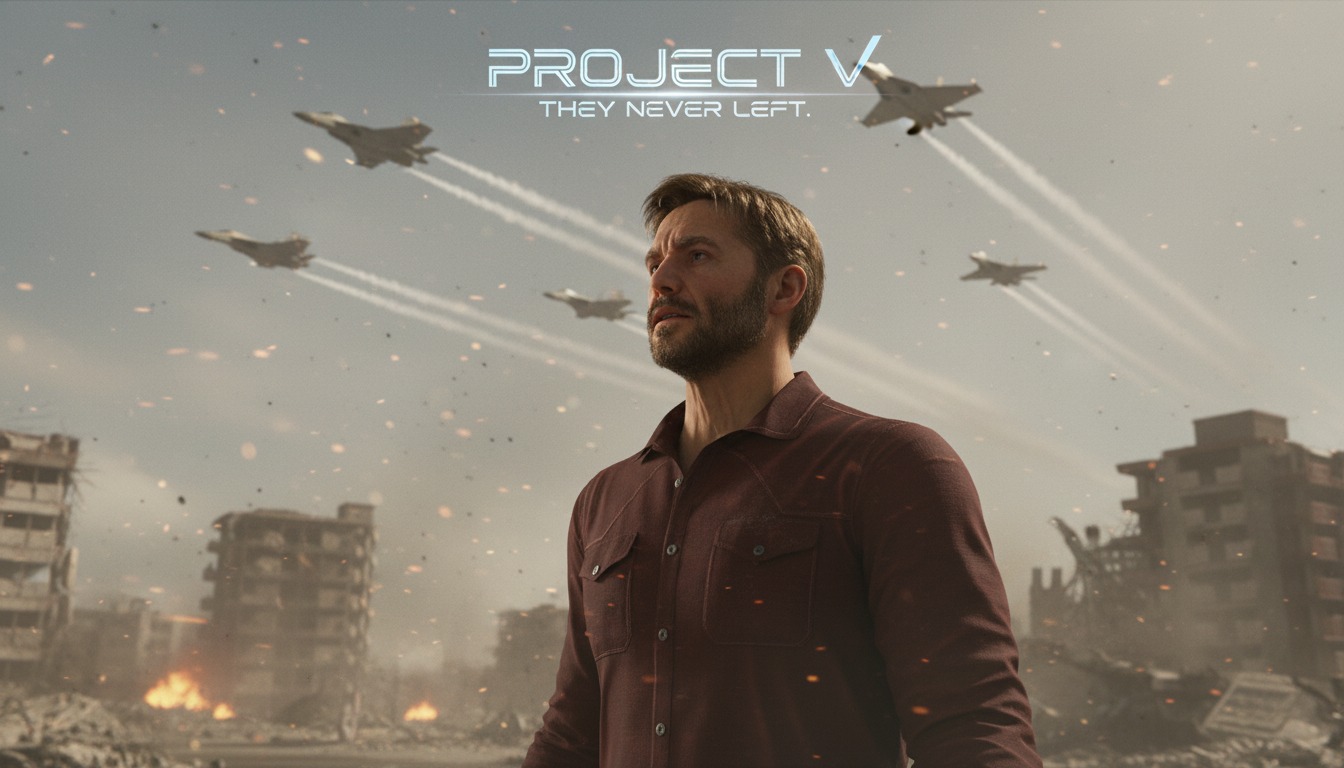
At Phantom Cave Studio, we approach pre-production the same way we approach Project V’s own development: define the core systems first, validate them on paper, then build. Our piece on how we balance creativity and deadlines covers that production philosophy in detail.
What to Look for in a Studio’s Communication Style
Communication problems are the most common source of game development project failure that isn’t about budget or scope. Technical skill is verifiable. Communication style is harder to assess from a portfolio. These signals help.
Response time before you’re a client. How long did it take the studio to respond to your initial inquiry? How detailed was the first response? A studio that takes a week to reply to a sales inquiry will take longer to respond to a production blocker.
Quality of questions asked. A studio that asks smart, specific questions about your game concept during the proposal phase understands production realities. A studio that asks no questions and produces a proposal immediately has either built your game before or is estimating without understanding your scope.
Documentation discipline. Ask how decisions made in meetings get recorded. Studios with strong documentation cultures send written summaries after calls, maintain shared project trackers, and update GDDs when decisions change. Studios without them rely on memory, which produces disagreements about what was agreed.
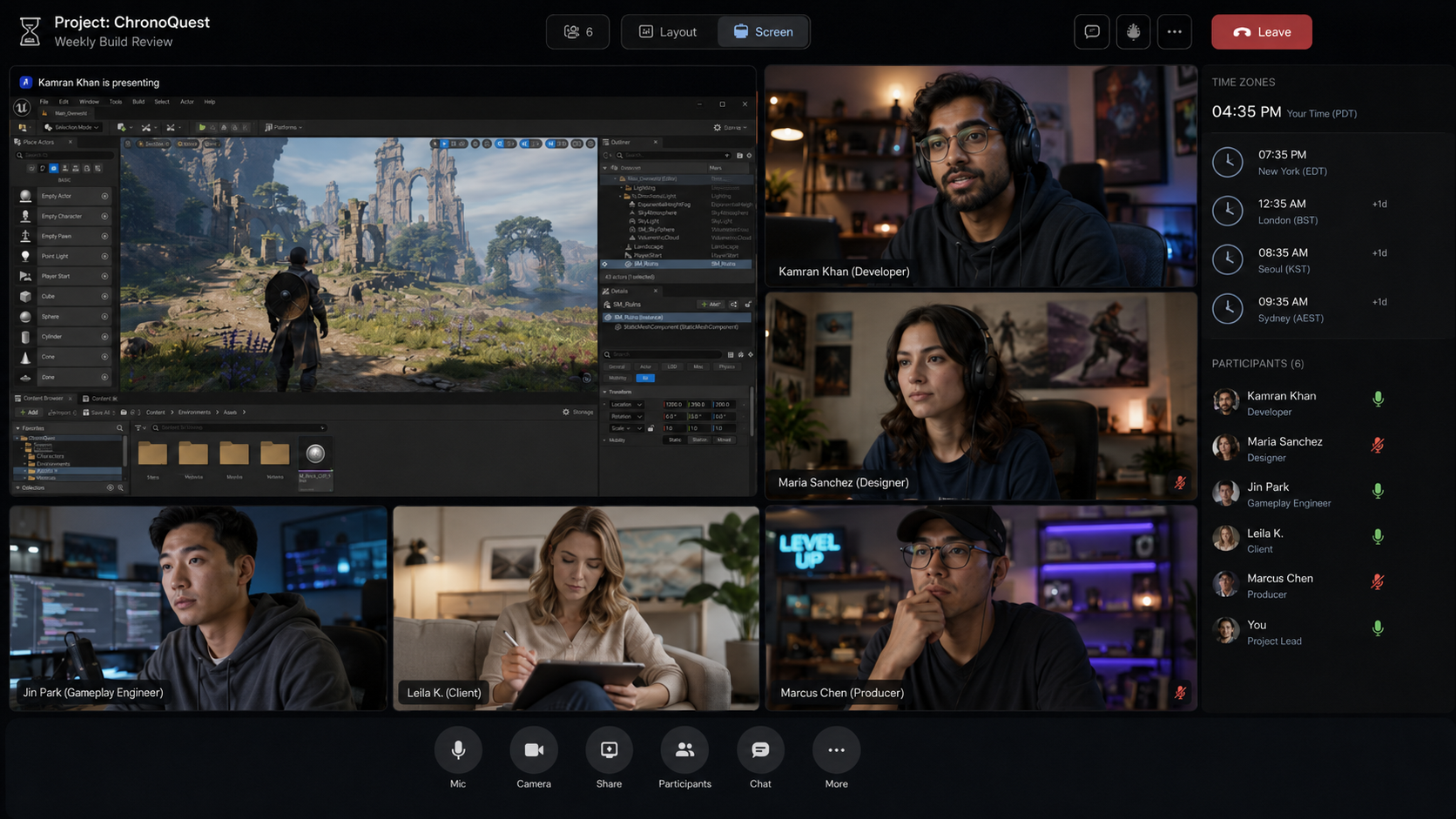
Time zone and language alignment. For international studios, daily standups work best when both sides can find 30 minutes of overlap. Pakistan Standard Time sits 5 hours ahead of UK time and 10 hours ahead of US Eastern Time. Early morning US / late afternoon UK works consistently. See more on working with international studios in our game development outsourcing guide.
Phantom Cave Studio: What Hiring Us Looks Like in Practice
Hiring a game development studio at Phantom Cave Studio starts with a brief review, not a sales call. We review your concept before scheduling a conversation so the first meeting is about your project specifically, not about us generically.
We offer milestone-based contracts as standard, with build deliveries at defined intervals so you can see progress rather than wait for a launch-day reveal. Our team communicates in English as a working language across documentation, code comments, and client calls. We work with international clients across the UK, California, Texas, New York, Florida, Georgia, Illinois, Washington, and North Carolina.
Our shipped mobile catalog and the active development of Project V for Steam are the portfolio you can verify. The technical breakdown of the cover system is the engineering transparency you can read before deciding whether we’re the right fit. And the affordable game development guide covers exactly what our rates mean in practice compared to the alternatives.
Ready to Hire the Right Studio?
Hiring a game development studio is a significant decision. The right partner ships the game you described, communicates problems before they become crises, and delivers work you can verify at every milestone. The wrong partner costs more than the project budget — it costs the time you spent waiting for something that wasn’t going to arrive.
At Phantom Cave Studio, we built a process designed for exactly this decision. Browse our work, read how we build, and then get in touch with your brief. We’ll tell you honestly whether we’re the right fit.
Frequently Asked Questions
Yes. It is standard practice to request an NDA before sharing detailed concepts, mechanics, or IP. Reputable game development studios will sign one without hesitation. A studio that pushes back on an NDA request is a red flag worth taking seriously.
Cost depends on the platform, scope, and the studio’s location. A hyper-casual mobile game built with a quality studio in Pakistan runs $8,000 to $25,000. A mid-core mobile title runs $80,000 to $200,000. A PC indie title runs $50,000 to $250,000. See our full game development cost breakdown for a complete comparison by platform and region.
No shipped games in the portfolio, no milestone structure in the proposal, unusually fast timelines for complex scope, no references available, and all-in fixed pricing with no breakdown. Any single red flag warrants a follow-up question. Multiple red flags in the same proposal warrant removing the studio from the shortlist.
Yes, and this is standard practice across the industry. Pakistani studios like Phantom Cave work with international clients across the US, UK, and Canada. The key requirements are clear IP assignment terms, milestone-based payment structure, and a communication schedule that accounts for the time zone difference. Our outsourcing guide covers this in detail.