Indie game marketing in 2026 is not what it was in 2020. The channels that felt like free money back then, TikTok organic reach, Reddit posts, Discord drops, have matured, gotten crowded, and in some cases changed their algorithms entirely. What hasn’t changed is the underlying logic: players discover games through other people, not through banner ads.
The tactics that work in 2026 still run on that principle. They just require more discipline and earlier execution than they used to.
This guide covers what actually moves wishlists and sales, what used to work and no longer does, what to spend money on if you have any, and how to time your campaign around the one thing that will dominate mainstream gaming attention in Q4 2026.
This guide is for: indie developers and small studio teams preparing to launch on Steam, mobile, or console without a publisher’s marketing budget.
Key Takeaways
- Steam’s algorithm uses wishlist velocity to determine visibility.</cite> Your wishlist count before launch directly affects store placement, not just day-one sales.
- TikTok’s easy organic reach has declined sharply since 2025.</cite> It still works, but it now requires a paid amplification layer on top of organic posting to drive meaningful reach.
- Mid-size Twitch and YouTube streamers (10,000 to 500,000 followers) outperform megastars for indie games because their audiences are more engaged and genre-specific.
- The #1 mistake in indie game marketing is starting at launch. Build your audience during development, not after the game ships.
- GTA 6 releases in November 2026, creating a gravitational pull on mainstream media attention from October 2026 through January 2027.</cite> If your launch window falls in that period, move it.
Build Your Steam Page Early: Earlier Than You Think
Your Steam page is the most important piece of indie game marketing infrastructure you own. It costs nothing to set up, and it starts compounding the moment it goes live.
Launch your Steam page 6 to 12 months before your game ships. Every wishlist is a day-one sale candidate. Steam notifies wishlisters when a game launches, which means your wishlist count is effectively a pre-built launch audience. Building it before launch is free, compounding, and entirely under your control.
The goal before launch is a minimum of 5,000 to 10,000 wishlists. That threshold is where Steam’s algorithm starts treating your title as worth surfacing to new players. Below that number, you’re relying almost entirely on external traffic to drive sales. Above it, the algorithm starts doing some of the work for you.
Keep your Steam page updated. Add new screenshots as development progresses. Post news updates to the community hub. Steam’s algorithm rewards active pages with better placement in the “Upcoming” section. A page that hasn’t been touched in four months signals to the algorithm that the project may be abandoned. It also signals to potential wishlisters that the team behind it may not be reliable.
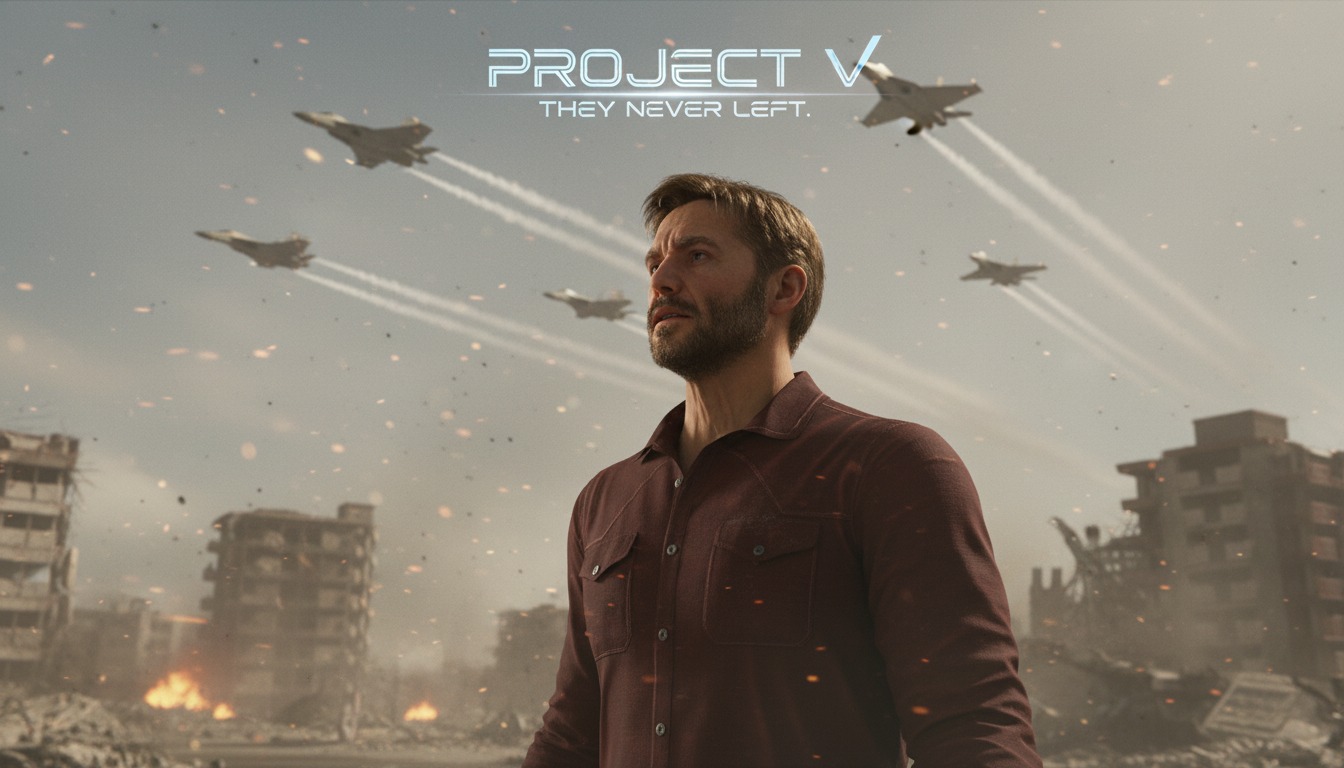
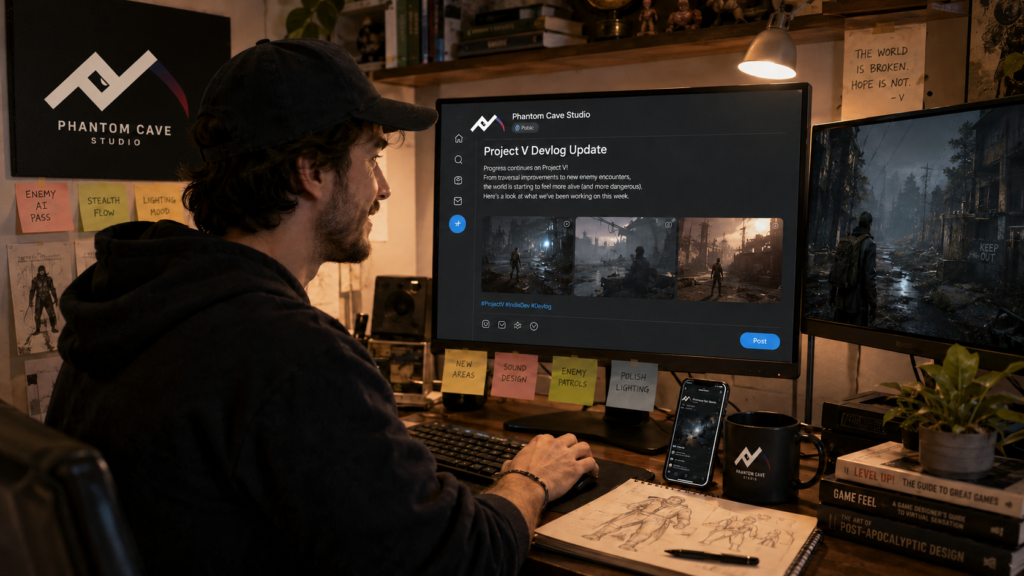
At Phantom Cave Studio, Project V has been building its Steam presence alongside active development, documenting the systems being built, including the cover shooter mechanics — so that wishlisters follow the game’s actual progress rather than waiting on silence.
Short-Form Video in 2026: Honest Assessment
Short-form video (TikTok, YouTube Shorts, Instagram Reels) remains the highest organic reach potential of any channel for indie games. The honest part is that “organic” means something different now than it did two years ago.
TikTok’s free organic visibility era ended in 2024 and declined further through 2025. Significant views today typically require paid promotion layered on top of organic posting. The model that works in 2026 is what some developers call “paid organic”: post clips organically, identify which ones gain natural traction, then put a small paid budget (around $100 to $200) behind those specific posts to amplify them. This fuels discovery by signalling to the algorithm that the content is gaining momentum, which in turn drives more organic traffic — it’s a feedback loop that’s significantly more efficient than running standard social media ads.
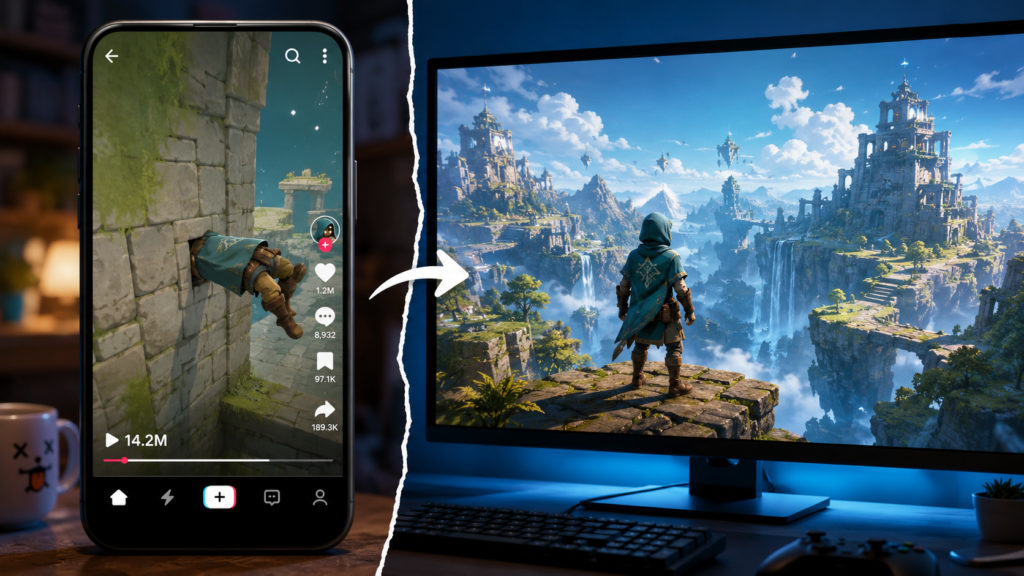
What you post matters more than how often you post. The clips that actually drive wishlists show one of three things: a satisfying mechanical moment that makes the viewer want to experience it themselves, a behind-the-scenes failure or bug that makes the development feel human and real, or a piece of world-building or narrative that makes someone curious about the story. Nobody cares about trailers on TikTok. Post the failures — show a bug that sent your character flying into space. People love authenticity.
Aim for 3 to 5 clips per week across platforms. That pace is sustainable for a small team and consistent enough to build algorithmic momentum without burning out the person creating content.
For more on how community-driven content has reshaped how small studios compete with larger ones, see our piece on how smaller studios are beating giants with community support.
Streamer Outreach: The Tier That Actually Works
41% of US gamers have purchased a game purely because a creator they trust recommended it. That statistic explains why streamer outreach is worth the time it takes to do correctly.
The tier that moves the needle for indie games is not the tier most developers target. <cite index=”7-1″>A TikTok creator is good for fast discovery but weak for tracked purchases. A YouTuber with a niche indie audience may drive fewer views but stronger wishlist intent. A Twitch streamer is often your best fit for community growth and live gameplay validation.</cite> Mid-size creators with 10,000 to 500,000 followers in your game’s specific genre outperform larger creators who post your game as one item on a content conveyor belt.
Personalize every pitch. Show the streamer you’ve watched their content. Explain why your game fits their audience specifically — not “because it’s a good game” but “because your viewers clearly enjoy cover-based shooters with narrative stakes, and that’s what we’ve built.” <cite index=”6-1″>The Ouroboros King, a chess-based roguelike, went from 500 wishlists in 10 months to a dramatic surge after the developer pivoted to researching streamers who enjoyed similar genres and crafting personalized pitches timed to Steam Next Fest.</cite>
Send keys to 20 to 50 relevant streamers 2 weeks before launch. Not everyone will play it. The ones who do, and who play it genuinely rather than as a sponsored obligation, often drive disproportionate wishlists. A single mid-size streamer who genuinely connects with your game can outperform a megastar who plays it for 20 minutes and moves on.
Build a Discord Community Before You Need One
A Discord server for your game creates a permanent gathering place for your most invested players. The critical word is “before.” A Discord server launched at launch has no members to welcome new players. A Discord server launched 6 months before launch has regulars who answer questions, create content, and recruit new members from their own networks without you asking them to.
A server with 500 genuinely engaged members is more valuable than one with 5,000 silent ones. Make it about more than just your game — discuss the genre, share interesting finds, host events, let people connect.
Discord communities also serve a development function, not just a marketing one. The feedback from engaged community members during development consistently improves the final game. How fan ideas drive innovation in game development covers exactly this dynamic — the players who follow development closely are often the ones who identify design problems before they ship, not after.
Devlogs: The Long Game That Pays Off
Regular development updates posted to Reddit (r/gamedev, r/indiegaming), YouTube, and your own blog do two things at once. They build an audience of people invested in your game’s story before it launches. They also generate indexed content that gives your game a searchable history on Google, which matters for press coverage and player discovery months after launch.
The players who follow development tend to leave reviews, create content, and recommend the game to others. They’re the difference between a launch week that spikes and drops, and one that spikes and stays elevated. Your devlog doesn’t need to be a production. A honest 3-minute update on what shipped this week, what broke, and what’s coming next is enough if it’s consistent.
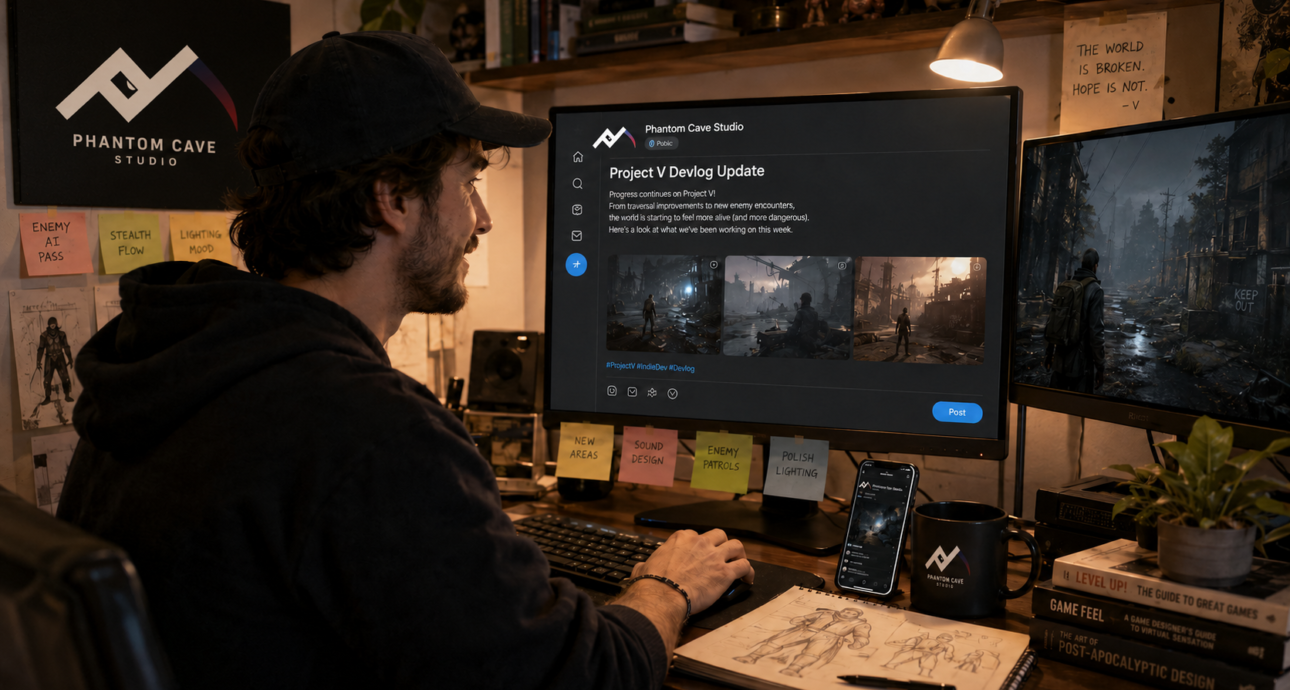
Phantom Cave’s own blog functions partly as a devlog for Project V. The technical breakdown of the cover system, the pieces on balancing creativity against deadlines, and the commentary on what makes game narratives land all serve the same purpose: they give people a reason to follow the studio’s work before the game ships, and they give journalists and press something to reference when writing about the studio.
What to Spend Money On (If You Have Any)
Most indie game marketing budget gets wasted on the wrong things. This table reflects 2026 return on spend, not conventional wisdom.
| Spend | Expected Return | Priority |
|---|---|---|
| Steam capsule art (key art) | Significantly higher click-through rate on all Steam placements | High |
| 60-second gameplay trailer | Primary conversion tool for wishlists and press | High |
| Press kit + Keymailer keys | Streamer and press coverage at low cost per impression | High |
| Steam Next Fest participation | Algorithmic boost, demo downloads, wishlist spike | High |
| Paid organic amplification (TikTok/Reels boosting) | Efficient discovery at $100-$200 per amplified post | Medium |
| Reddit promoted posts | Targeted, high-intent audience at low CPM | Medium |
| Facebook/Instagram ads | Declining return for most indie genres | Low |
| Google Display ads | Low intent, poor conversion for games | Low |
The single highest-ROI spend for most indie games is a good capsule. <cite index=”4-1″>Steam tags matter too — they determine which players see your game in recommendations.</cite> Choose tags that accurately represent your game and have real search volume on Steam. A game with great capsule art and correct tags gets surfaced to the right players even without a paid campaign.
Steam Next Fest deserves its own call-out. <cite index=”6-1″>Timing streamer outreach to coincide with Steam Next Fest can produce dramatic wishlist surges</cite>, because the event already concentrates player attention on upcoming titles. Participating with a demo means players who try and enjoy your game wishlist it on the spot, which generates exactly the wishlist velocity the algorithm rewards.
The One Calendar Risk in Q4 2026
GTA 6 releases in November 2026. From October 2026 through January 2027, mainstream media attention and general content creator output will be dominated by Rockstar’s title. This doesn’t make a Q4 launch impossible — niche genre communities and dedicated indie streamers won’t abandon your game for GTA 6 — but it does mean competing for media coverage and casual player attention during the worst possible window for anything outside the AAA mainstream.
The ideal launch window for most indie titles in 2026 is Q2 — April through June — which sits between early-year crowding and the late-year GTA effect. If your game is targeting a Q4 launch, plan to lean harder on genre-specific streamers and niche communities rather than mainstream gaming press, and budget extra for paid amplification during a period when organic reach will be compressed.
This is the same principle behind why game longevity depends on community more than launch timing — the studios that build real communities during development aren’t dependent on a perfect launch window to survive it.
The Mistake That Kills Most Indie Launches
Starting marketing at launch.
By the time your game is available to buy, you’re too late to build wishlist momentum, community trust, or streamer relationships. Those take months. The studios that have strong first weeks are the ones that treated marketing as a development discipline, not a launch task.
Start 6 months early. Show footage before it’s polished. Players are more forgiving of early work-in-progress footage than developers expect, and the community built during development is worth more than any launch day spend. The wishlist you need on day one gets built in the months before, not the week of.
Phantom Cave Studio’s Approach to Indie Marketing
At Phantom Cave Studio, we’re building the marketing for Project V alongside the game itself. That means sharing real systems as they get built, documenting the problems we solved, and building a community before we need it. The cover system deep-dive is marketing. This blog is marketing. The Discord we’re building is marketing. None of it feels like marketing because it’s grounded in what’s actually being made.
If you’re developing a game and want to understand how to build marketing into development rather than bolt it on at the end, get in touch. That’s a conversation we’re always happy to have.
Ready to Market Your Game the Right Way?
Indie game marketing in 2026 rewards studios that start early, stay consistent, and build communities before they need them. The channels work. The tools exist. The question is whether you’re using them during development or scrambling to catch up after launch.
At Phantom Cave Studio, we market while we build. See what we’re working on or get in touch if you want to talk through a marketing approach for your own title.
Frequently Asked Questions
Start at least 6 months before your planned launch date. Set up your Steam page first, then build social accounts and start posting development content. The community and wishlist count you build during development determine your first-week performance more than anything you do at launch.
A common benchmark is 10 to 20% of your total production budget. For a $50,000 game, that’s $5,000 to $10,000. Most of the highest-ROI activities — devlogs, Discord, streamer outreach, Steam Next Fest — cost time rather than money. Spend what budget you have on capsule art, a gameplay trailer, and targeted paid amplification of your best-performing organic content.
Yes, but differently than it did in 2022 or 2023. Pure organic reach has declined. The approach that works now is posting consistently, identifying which clips naturally gain traction, then amplifying those specific posts with a small paid budget. Treat TikTok as a discovery channel, not a free marketing engine.
Not necessarily. Publishers provide funding, marketing reach, and platform relationships, but they take a revenue share and often creative control. Self-publishing on Steam with a disciplined organic marketing approach is a viable path in 2026 for games with strong core loops and content that generates shareable moments. The calculation changes if you need funding to complete development.
Start early and build the Steam wishlist before launch. Everything else — the streamer outreach, the Discord, the short-form content — supports that goal. Wishlist velocity before launch determines your algorithmic placement at launch, which determines whether Steam works as a discovery channel for your game or whether you’re invisible on the store.
For most indie titles, yes. GTA 6 launches in November 2026 and will dominate mainstream media and creator attention through January 2027. Q2 2026 (April through June) is the better window. If a Q4 launch is unavoidable, focus your outreach on genre-specific communities and niche streamers rather than mainstream gaming press.