Should You Outsource Game Development?
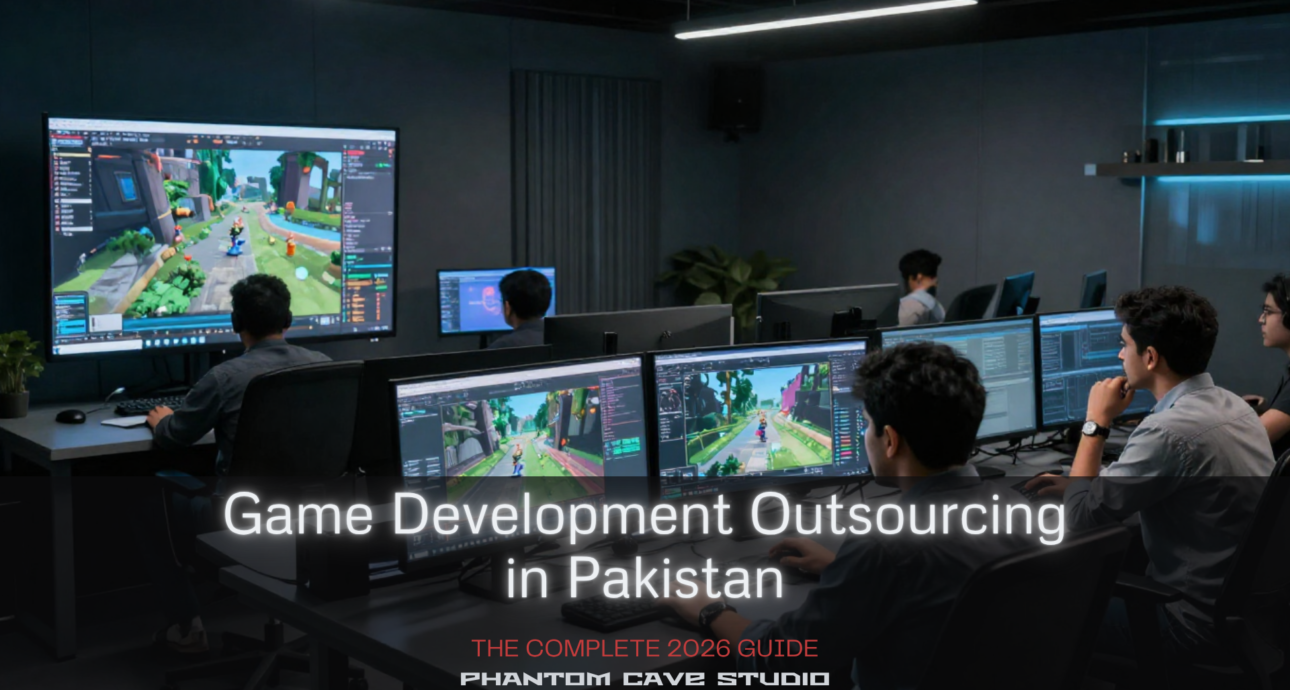
Outsourcing game development is one of the most consequential decisions a company entering the gaming space can make. Done well, it is faster, cheaper, and produces a better game than hiring in-house. Done poorly, it is expensive, slow, and demoralising. Here is how to think about the decision clearly.
When Outsourcing Game Development Makes Sense
You Do Not Have In-House Game Development Expertise
Building a game development team from scratch takes 12–18 months minimum — hiring, onboarding, tool setup, process definition. If you need a game in less time than that, outsourcing is almost always the right answer.
You Are Entering a New Genre or Platform
Even established game studios outsource when they need expertise they do not have internally. A studio that makes PC games and wants to enter mobile will often partner with a mobile-specialist studio rather than try to develop that capability in-house.
You Need to Control Fixed Costs
Building in-house means salaries, benefits, hardware, software licences, office space, and HR overhead — regardless of whether projects are actively in production. An outsourced studio is a variable cost: you pay for production time, not headcount.
You Want Access to International Talent at Better Rates
Game development talent in Pakistan, Ukraine, Poland, and parts of Southeast Asia is genuinely excellent — and costs 40–70% less than equivalent talent in North America or Western Europe. For the same budget, you can hire a larger, more experienced team by outsourcing.
When Outsourcing Game Development Does NOT Make Sense
You Cannot Define What You Want
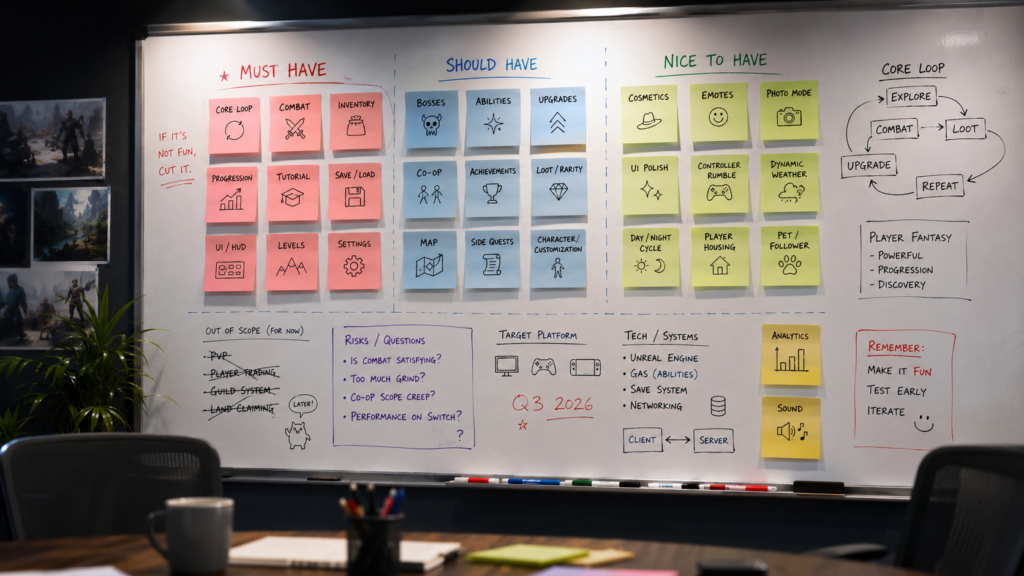
Outsourcing requires a clear brief. If you do not know what game you want to make, no studio can build it for you. Define the concept, audience, platform, and core loop before approaching any external partner.
You Need Real-Time Creative Collaboration
The best games are the product of constant iteration — playtesting, adjusting, replaying. If your creative process requires daily in-person collaboration and rapid verbal feedback loops, an in-house team will serve you better.
The Game Is Core to Your IP and Long-Term Value
If the game itself is your primary business — your most important product and the thing investors will value you on — the long-term capability arguably belongs in-house. You can start with outsourcing and build in-house capacity over time as the project succeeds.
The Outsourcing vs In-House Cost Comparison
| Factor | Outsourced Studio | In-House Team |
|---|---|---|
| Time to start production | 2–6 weeks | 6–18 months (hiring) |
| Cost flexibility | Variable (pay per project) | Fixed (salaries continue) |
| Access to specialised skills | Immediate (in team) | Requires separate hiring |
| IP and knowledge retention | Contractual | Stays in-house |
| Long-term cost | Higher per hour | Lower at scale |
How Phantom Cave Handles Outsourced Projects
We work with clients who are outsourcing game development for the first time and with experienced publishers looking for a reliable co-development partner. Our process is designed to give you visibility and control at every stage — weekly build drops, milestone reviews, and direct access to the team lead — without requiring you to manage the day-to-day production.
FAQs
Is outsourcing game development risky?
It carries risks that in-house development does not — primarily communication gaps and quality control at a distance. These risks are manageable with the right contract structure, milestone framework, and communication habits.
What is the average cost to outsource a mobile game?
A polished hyper-casual or casual mobile game typically costs $15,000–$80,000 outsourced. A mid-core game with richer systems runs $80,000–$300,000+. Phantom Cave offers transparent project-based pricing across all categories.